
The world has undergone a series of changes since its formation. From the start of the 19th century to the present day, society has undergone transformative changes in nearly every aspect of life, more so rapidly across technology, demographics, and the environment over recent decades. Migration, globalisation, and the movement of families across generations have created identities that cannot be contained by borders. Migration has shaped human history by driving economic growth, shifting demographics, and connecting millions of international migrants across the globe.
Migration is not only limited to other spheres of life but also sport where several athletes or sportsmen have left their countries of origin to go to better places in a bid to improve their craft or their families having moved so many years ago to other countries for different reasons.
In Africa, providing a conducive environment that will nurture an elite athlete; to be specific a footballer is almost impossible. The underlying challenges of poor infrastructure, coaching and scouting gaps make it extremely hard to break the barriers. For some countries that have made effort to focus on academies, they can do as much and often export the raw talent to Europe while still young (below the age of 15) to be able to adapt to the demands at an early stage.
The other avenue that several nations have opted for is to try and trace for players across Europe with connections back home. You either entice them with monetary rewards or pick on those that have failed to make the grade for the European nations despite playing for such countries in the Junior National Teams. Nigeria, Senegal, Morocco, Tunisia, Algeria, DR Congo and several countries have in recent years benefited from this strategy.
Case study of Morocco
When Morocco became the first African team to reach the semi-finals of a FIFA World Cup in 2022, the football world was stunned, but for the football administrators in Morocco, this was a ripple effect of a strategy that had taken over ten years. They did not only build a Moroccan team but rather put in place a global Morocco. There was a deliberate effort from the Royal Kingdom of Morocco and the Football Federation to trace the millions of Moroccans and people of Moroccan descent living around the world, particularly across Europe in countries such as France, Spain, Belgium and the Netherlands.
At the recently concluded World Cup in Canada, Mexico and the USA, of the 26 players that formed the final squad for the Atlas Lions, 19 were born outside Morocco and the list is as below;
Key Countries of Birth
Spain: Achraf Hakimi, Brahim Díaz, Ismael Saibari, Chadi Riad, Munir El Kajoui, Ayoube Amaimouni-Echghouyab.
France: Issa Diop, Ayyoub Bouaddi, Gessime Yassine, Neil El Aynaoui, Samir El Mourabet, Redouane Halhal.
Netherlands: Noussair Mazraoui, Sofyan Amrabat, AnassSalah-Eddine.
Belgium: Bilal El Khannouss, Chemsdine Talbi, Zakaria El Ouahdi.
Canada: Yassine Bounou (Bono) was born in Montreal before moving to Morocco as a young boy.
Football in modern times has become a true mirror of our society. As mentioned earlier, it also reflects centuries of human movement aided by colonialism, migration, economic change and search for opportunities. The strongest European football nations increasingly reflect societies transformed by migration. France’s teams have included generations of players with roots across Africa, the Caribbean and beyond.
Even back in Africa, Nations that have made it deliberate to convince sons of the soil or those that have attachment to represent them have gone on to perform incredibly well.
Why FUFA and Uganda should take the same route
In 1978 when Uganda Cranes reached the final of the Africa Cup of Nations, all the players were locally based. To date, that is Uganda’s biggest achievement in football and perhaps someone can use that as case but it is 48 years since then and so much has changed over that period.
Modern football demands investment, and if you want to compete and ‘chill with the big boys,’ you ought to do what they do. You cannot want to emulate what they are doing and then do otherwise.
If Morocco represents the power of a large global diaspora, Cabo Verde represents something equally extraordinary.
Maybe Morocco is a bigger economy than Uganda and perhaps far more developed than us but take an example of Cabo Verde. A small Atlantic island nation with a population of around half a million people reached the world stage by thinking bigger than geography. But majority of those players were not born there, the Cabo Verdean diaspora is often estimated to be larger than the population living inside the country itself.
So the strategy is simple: build at home, connect abroad and turn the diaspora into strength.
In recent years, FUFA has lured Elio Caprodossi, Uche Ikpeazu, Toby Sibbick, Melyvn Lorenzen, Al Hassan Baba, Jordan Obita, Bevis Mugabi and Elvis Bwomono, who have grown and lived outside of Uganda to play for the national team and indeed some have been of value. But for now, it seems like a popcorn machine where one pops out of nowhere instead of having a rather tailor-made strategy.
Maybe the task goes beyond FUFA, and with Uganda co-hosting AFCON 2027 alongside Kenya and Tanzania, Government perhaps needs to take keen interest in this. When FUFA President Eng. Magogo Moses Hassim asked for UGX 1.5 billion to aid in the naturalisation process of players, there was an uproar from the public but perhaps it came from an uninformed point of view. Such an amount can only help you to get two or three elite players.
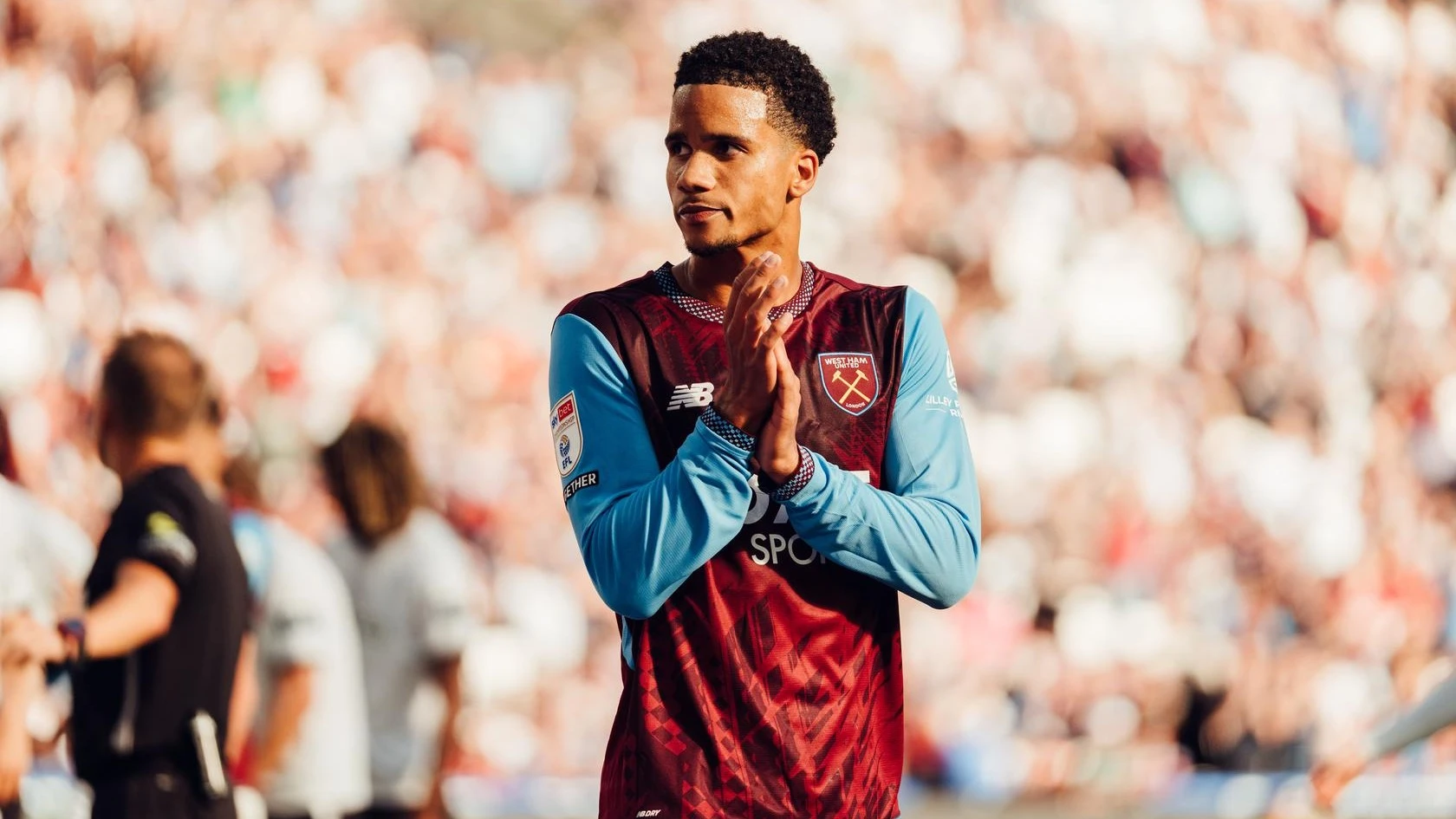
Take an example of Divine Mukasa, currently on loan at West Ham from Man City. A young player who has already represented England with the Junior National Teams. How much do you think would convince him to ditch the hopes of representing the Three Lions? Maybe it is not even about money but rather Uganda as a nation showing the need to have him. Imagine if Government alongside representatives from National Council of Sports went on a visit across Europe to try and talk to the several players of Ugandan descent, wouldn’t be easier than FUFA having just one person (Mathias Ndawula) moving from one country to another?
AFCON 2027 might be on short notice, but it could be the building block of trying to attract players of such calibre.
Players with Ugandan roots or connection
Everyone close to Ugandan football can share an endless list of players with Ugandan connection that can be eligible to feature for the Uganda Cranes and here are some of the names:
Divine Tayon Mahogany Mukasa – Forward (West Ham)
Born to a Lithuanian mother and a Ugandan father Sam Mukasa in London Borough of Newham on 22 August 2007. Mukasa is eligible to represent the Lithuania, Uganda, and England national teams. At youth level, he has represented England. Mukasa scored his first goal for England in an U16s friendly game on 23 February 2023, in a 3–0 win against Scotland. He has gone on to represent England with the U17 and U19.
Mukasa is currently on loan at West Ham United from Man City, playing six games and scoring twice.
Bashir Humphrey – Defender (Burnley)
Born on 15 March 2003, in Exeter, Humphreys played in the youth setup of Reading before a stint in grassroots football. He signed for Chelsea at under-15 level, going on to sign a scholarship deal in 2019. After loan stints at Paderbon and Swansea, Burnley announced Humphreys would be joining the club on a permanent basis on 20 May 2025.
Born in England, Humphreys is of Ugandan and English descent but has represented England at U16, U19 and U20.
Ryan Denis Edward McQueen Kavuma – Forward (Portsmouth)
Kavuma was born on 1 January 2009 at Hammersmith Hospital in White City, London. Born in England, he is of Ugandan descent through his parents. He is currently on loan at Portsmouth from Chelsea where he has grown up the ranks, including featuring for the senior team already as a second half substitute on 4 April 2026 during the 7–0 victory against Port Vale in the FA Cup quarter-finals.
At the international level, Kavuma is eligible to play for Uganda through his parents but has already featured for England at the U15, U16 and U17.
Stephy Alvaro Mavididi – Forward (Watford)
A player that showed a lot of promise at a tender age having come from the Hale End at Arsenal, Mavididi is currently on loan from Leicester City. Although he is of DR Congo descent, his parents lived and worked in Kampala for some time before moving to England.
He has represented England at the U16, U17, U19 and U20 level.
Moses Dramwi Mawa – Forward (Sepsi OSK)
Born in Oslo, Norway, Mawa has connection to Uganda through his father. He has lived his life entirely in Norway, playing for several clubs including; Stromsgodset, Hamkam, Kristiansundand KFUM.
Arnold Vula – Forward (KV Beerschot)
Despite having roots in DR Congo, Vula’s parents have previously lived in Uganda and he is eligible to play for Uganda Cranes.
Caylan David Vickers – Winger (Burton Albion)
Despite being born in Windsor, England, Vickers qualifies to play for Uganda Cranes through his parents, especially the mother who is of Indian descent but grew and lived in Uganda for some time.
Other players who have connection to Uganda and can feature for the Uganda Cranes include; Abdoulaye Sissiako (Sint-Truiden), Ben Ahmed Toure (Barnsley), Daniel Jordan Dongmo (Nacional), Souleyman Diaby (FC Winterthur), Ovie Ejeheri (Midtjylland), Robin Ostrom (Silkerborg), Akpan Udoh (MostaFC) and Dieudonne Gaucho Debohi (Rakow Czestochowa) among others.
It is therefore incumbent upon FUFA and the Government of the Republic of Uganda to know that a nation’s greatest resource may no longer only be the people living inside its borders but also be the millions who carry that nation with them. The current generation of footballers increasingly belong to more than one place. Some will represent where they were born while others will represent where their families began or any sort of connection to those countries.